Contents
- 1 Introduction
- 2 What Is an Exception?
- 3 What Is an Exemption?
- 4 The Core Difference Between Exception and Exemption
- 5 Why People Confuse the Two Terms
- 6 Exception vs Exemption in Simple Language
- 7 Examples of Exceptions
- 8 Examples of Exemptions
- 9 Exception vs Exemption in Law
- 10 Exception vs Exemption in Taxation
- 11 Exception vs Exemption in the Workplace
- 12 Exception vs Exemption in Education
- 13 Exception vs Exemption in Government Policies
- 14 How Exceptions Are Created
- 15 How Exemptions Are Granted
- 16 Common Mistakes People Make
- 17 Exception vs Exemption in Everyday Life
- 18 Which Term Should You Use?
- 19 The Importance of Understanding the Difference
- 20 Conclusion
Introduction
Many people use the words exception vs exemption as if they mean the same thing. At first glance, the confusion makes sense. Both terms involve situations where a rule does not fully apply. Yet their meanings are quite different.
A misunderstanding between exception and exemption can create problems in legal documents, workplace policies, tax forms, educational rules, and everyday communication. Choosing the wrong word may change the meaning of a sentence completely.
Consider a school rule that requires students to wear uniforms. A student allowed to wear different clothing for medical reasons has an exemption. Meanwhile, a sports day where all students can wear casual clothes is an exception to the regular uniform rule. The outcome looks similar, but the reason behind it is different.
Understanding this distinction helps people communicate more clearly and avoid costly mistakes. This guide explains exception vs exemption in simple language, covering definitions, examples, legal applications, workplace usage, tax implications, and common misconceptions.
What Is an Exception?
An exception is a case that does not follow a general rule.
Most rules are created to apply broadly. Occasionally, specific situations fall outside the normal pattern. Those situations become exceptions.
Think about a restaurant that closes every Monday. If it opens on one particular Monday because of a holiday event, that day becomes an exception to the usual schedule.
The key idea behind an exception is that the rule remains in place. Only a particular situation is treated differently.
Exceptions often arise because circumstances are unusual, unique, or specifically recognized by the rule itself.
What Is an Exemption?
An exemption is official permission not to follow a rule, requirement, obligation, or duty.
Unlike an exception, an exemption is usually granted to a person, group, organization, or item.
Imagine a city requiring all residents to pay a specific fee. Certain senior citizens may qualify for an exemption from that fee. The rule still exists for everyone else, but those individuals are excused from compliance.
Exemptions are often based on eligibility, status, qualifications, or special circumstances.
Government agencies, employers, schools, and legal authorities frequently issue exemptions.
The Core Difference Between Exception and Exemption
The easiest way to understand the difference is to focus on the source of the special treatment.
An exception occurs because a situation falls outside the normal rule.
An exemption occurs because someone receives permission to be excluded from the rule.
The rule itself creates exceptions.
An authority usually grants exemptions.
That distinction may seem small, but it changes the meaning significantly.
For example, a museum may be closed on public holidays except for one annual celebration. That celebration is an exception.
If a visitor receives special permission to enter during restricted hours, that visitor has an exemption.
Why People Confuse the Two Terms
Several factors contribute to the confusion.
Both words involve situations where standard requirements do not apply.
Many people encounter the terms in legal, educational, and workplace settings where the distinctions are not always explained clearly.
Everyday conversations often blur the difference because speakers focus on the result rather than the reason.
A person who does not need to follow a rule may seem like an exception even when they actually have an exemption.
Looking beyond the outcome and examining why the rule does not apply usually reveals the correct term.
Exception vs Exemption in Simple Language
A practical shortcut can make the distinction easier.
Ask one question:
“Was someone officially excused from the rule?”
If the answer is yes, it is probably an exemption.
If the answer is no and the situation naturally falls outside the rule, it is likely an exception.
This simple approach works in many real-life situations.
Examples of Exceptions
Examples often make definitions easier to remember.
A library may prohibit food inside the building. During a special fundraising event, snacks are allowed. The event is an exception.
A company might require employees to work from the office. Severe weather conditions could create an exception allowing remote work.
A school may ban mobile phones during classes. An emergency situation could become an exception to that rule.
In each case, the unusual situation creates a temporary departure from the standard policy.
Examples of Exemptions
Exemptions usually involve approval or qualification.
A student with documented medical needs may receive an exemption from certain physical activities.
A business organization might qualify for a tax exemption under specific laws.
Certain employees can receive exemptions from particular workplace requirements based on their job roles.
A religious accommodation may provide an exemption from a dress code policy.
These examples show how exemptions are granted to individuals or groups rather than to situations.
Exception vs Exemption in Law
Legal systems rely heavily on both concepts.
An exception in law identifies circumstances where a rule does not apply. Legislators often build exceptions directly into statutes and regulations.
For example, a law may prohibit parking in certain areas except during designated hours. Those designated hours represent an exception.
An exemption in law typically removes a person or organization from a legal requirement.
Certain nonprofits may receive exemptions from taxes. Individuals may qualify for exemptions from specific obligations under defined conditions.
Lawyers pay close attention to the distinction because legal outcomes often depend on it.
Exception vs Exemption in Taxation
Tax laws provide some of the clearest examples.
A tax exemption allows a person, organization, or property to avoid certain taxes.
Charitable organizations frequently qualify for tax exemptions because of their public service activities.
Property tax exemptions may apply to specific categories of homeowners under local regulations.
Tax exceptions work differently.
Certain transactions may be treated as exceptions under tax rules. Rather than granting relief to a specific taxpayer, the law recognizes that a particular situation falls outside normal taxation requirements.
Understanding the difference can help taxpayers interpret regulations correctly.
Exception vs Exemption in the Workplace
Workplace policies often include both exceptions and exemptions.
A company policy requiring office attendance may include exceptions for severe weather emergencies.
Employees with approved accommodations may receive exemptions from certain requirements.
Human resource departments regularly handle exemption requests related to medical conditions, religious practices, or legal protections.
Managers often deal with exceptions when unusual business circumstances require temporary changes to standard procedures.
The distinction helps organizations apply policies consistently and fairly.
Exception vs Exemption in Education
Schools and universities frequently use both terms.
An exception might occur when a school suspends a normal rule during a special event.
Students receiving official permission to bypass a requirement generally have exemptions.
For example, a student may obtain an exemption from a course requirement due to prior academic credit.
A school-wide field trip that changes attendance rules would be considered an exception.
Educational institutions rely on these distinctions to maintain fairness while accommodating individual needs.
Exception vs Exemption in Government Policies
Government regulations often contain detailed exceptions and exemptions.
Policy makers create exceptions to address situations that do not fit standard rules.
Exemptions help governments accommodate specific groups, professions, organizations, or circumstances.
Environmental regulations, licensing requirements, public safety rules, and tax codes frequently include both concepts.
Reading policy language carefully helps determine whether a provision creates an exception or grants an exemption.
How Exceptions Are Created
Exceptions are often built directly into rules.
A policy may state that a rule applies in all situations except under specific conditions.
Lawmakers, employers, educators, and organizations create exceptions when they recognize predictable situations where a general rule should not apply.
These situations become part of the rule itself.
Because exceptions are usually written into policies, individuals often do not need to request them.
How Exemptions Are Granted
Exemptions generally require a formal process.
An individual or organization may need to submit documentation, complete an application, or demonstrate eligibility.
Authorities review the request and decide whether the exemption should be approved.
Medical exemptions, religious exemptions, tax exemptions, and professional exemptions often involve documentation requirements.
Approval usually depends on meeting specific criteria established by law or policy.
Common Mistakes People Make
One common mistake is using exception and exemption interchangeably.
Another error occurs when people assume every exclusion from a rule is an exemption.
Some situations require no approval because they are already recognized as exceptions.
Others require formal authorization because they involve exemptions.
Misunderstanding the difference can lead to confusion in contracts, policies, and legal discussions.
Careful attention to context prevents these mistakes.
Also Read : BBW Meaning in Text: What Does BBW Mean in Chats, Social Media, and Dating?
Exception vs Exemption in Everyday Life
The concepts appear more often than many people realize.
A movie theater may prohibit outside food but allow it during a special promotional event. That event is an exception.
A customer with a documented medical condition who receives permission to bring specific food inside may have an exemption.
A parking garage may have an exception for maintenance vehicles.
A disabled driver may qualify for an exemption from certain parking restrictions.
Real-life examples make the distinction easier to understand and remember.
Which Term Should You Use?
Choosing the correct word depends on the situation.
Use exception when discussing a circumstance that falls outside a general rule.
Use exemption when referring to permission or official relief from a requirement.
Looking at the source of the exclusion often provides the answer.
If the rule itself creates the special situation, exception is usually correct.
If an authority grants permission to avoid the rule, exemption is generally the better choice.
The Importance of Understanding the Difference
Clear communication depends on precise language.
Legal professionals, educators, business leaders, government officials, and everyday individuals benefit from understanding these terms correctly.
A contract may produce a different interpretation depending on whether it references an exception or an exemption.
Policy documents become clearer when the correct term is used.
Accurate language reduces misunderstandings and helps people make informed decisions.
Conclusion
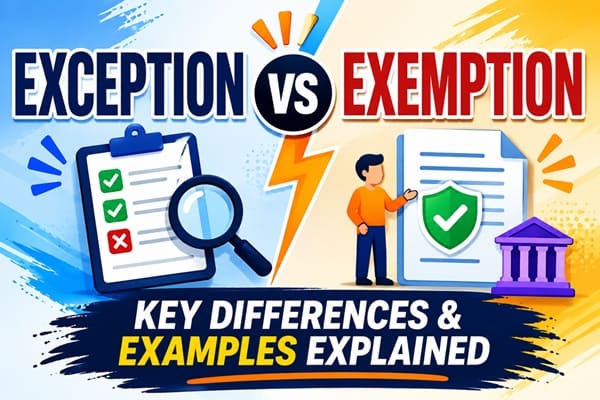
The difference between exception vs exemption comes down to one key idea. An exception is a situation that falls outside a general rule, while an exemption is permission to be excused from that rule.
Although both terms involve rules that do not fully apply, they operate in different ways. Exceptions are usually built into policies, laws, or procedures. Exemptions are typically granted to specific individuals, groups, or organizations based on eligibility or approval.
Recognizing this distinction makes legal documents easier to understand, workplace policies clearer to follow, and everyday communication more accurate. Once you focus on whether the exclusion comes from the rule itself or from official permission, choosing the right term becomes much simpler.