
Contents
- 1 Introduction to the Confusion Between Tonite and Tonight
- 2 Meaning of Tonight in Standard English
- 3 Meaning and Use of Tonite in Informal Writing
- 4 Tonite vs Tonight: Core Differences Explained
- 5 Why “Tonite” Became Popular
- 6 Grammar Rules Behind Tonight
- 7 Where “Tonite” Is Acceptable
- 8 Tone and Audience Matter in Word Choice
- 9 Impact of Digital Communication on Spelling
- 10 Common Mistakes Writers Make
- 11 Historical Evolution of the Word
- 12 How Style Guides View Tonite vs Tonight
- 13 Real-Life Examples of Usage
- 14 Why “Tonight” Remains the Preferred Choice
- 15 Final Understanding of Tonite vs Tonight
Introduction to the Confusion Between Tonite and Tonight
Writing “tonite” instead of “tonight” looks casual, but the choice between these two forms affects clarity, tone, and credibility. Many people see both versions in texts, social media posts, song titles, and informal messages, which creates confusion about which one is correct.
The word “tonight” belongs to standard English and appears in formal writing, academic content, and professional communication. “Tonite” is a shortened, informal spelling used mainly for stylistic or branding purposes.
Understanding the difference between “tonite vs tonight” helps writers choose the right form depending on audience, platform, and purpose. Small spelling choices can change how a message is received.
Meaning of Tonight in Standard English
The word “tonight” refers to the present or upcoming night of the current day. It is a compound word formed from “to” and “night” in older English usage, later merged into its modern spelling.
In daily communication, “tonight” is used to describe events happening after sunset or later in the same day. It is the standard form accepted in all dictionaries, schools, and professional writing systems.
Examples include simple sentences like planning dinner tonight, attending a meeting tonight, or studying tonight. The spelling remains consistent across all formal contexts.
The strength of “tonight” lies in its universality. Readers across different regions instantly recognize it without confusion.
Meaning and Use of Tonite in Informal Writing
The spelling “tonite” is a phonetic shortcut of “tonight.” It reflects how the word sounds when spoken quickly. Instead of following standard spelling rules, it focuses on sound and simplicity.
This version is not considered correct in formal English writing. However, it appears in informal environments where style or brevity matters more than grammar accuracy.
People often use “tonite” in casual text messages, advertisements, creative writing, or branding where a relaxed tone is desired. It gives a conversational and slightly nostalgic feel.
The choice of “tonite” is intentional in many cases. Writers use it to create a specific mood rather than follow grammar rules.
Tonite vs Tonight: Core Differences Explained
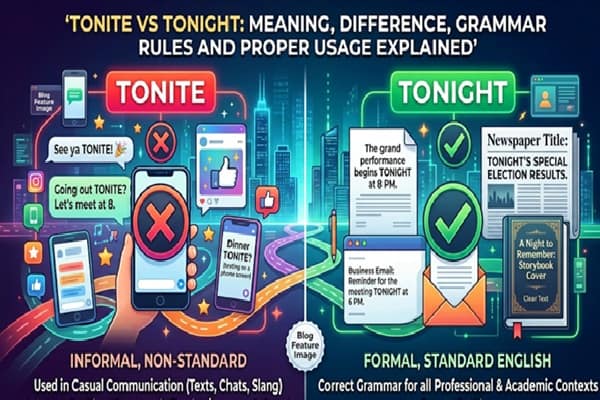
The main difference between “tonite vs tonight” lies in formality and acceptance. “Tonight” is the correct and standard spelling used in all official contexts.
“Tonite” is informal and non-standard, used for effect rather than correctness. It does not appear in formal grammar guidelines or academic writing.
Another difference is readability. “Tonight” is instantly recognized and universally accepted, while “tonite” may feel stylistic or outdated depending on the reader.
Tone also plays a role. “Tonight” feels neutral and professional, while “tonite” feels casual, creative, or promotional.
Why “Tonite” Became Popular
The rise of “tonite” is connected to advertising and pop culture. Earlier print media often shortened words to fit space limits in posters, headlines, and signage.
Brands also used simplified spellings to make messages stand out. Shorter words were easier to print, remember, and display in bold formats.
Music and entertainment industries contributed heavily to this spelling. Song titles and album names often use “tonite” to create a unique identity or retro feel.
Over time, this stylistic choice moved into casual digital communication, where speed and creativity matter more than strict grammar.
Grammar Rules Behind Tonight
From a grammar perspective, “tonight” is a compound adverb formed from “to” and “night.” Modern English treats it as a single word without separation.
It functions mainly as an adverb of time, describing when something happens. It can also work as a noun in certain contexts, such as “the tonight of the event” in poetic usage.
Standard English rules clearly mark “tonight” as the correct spelling. All educational systems and writing guidelines recommend using this form in essays, reports, emails, and professional content.
Consistency is the key rule. Once used in formal writing, “tonight” should remain unchanged throughout the text.
Where “Tonite” Is Acceptable
Even though “tonite” is not standard, it still has a place in modern communication. Informal texting between friends often uses shortened spellings for speed.
Creative writing sometimes uses “tonite” to create a voice or personality. It can suggest nostalgia, informality, or artistic expression.
Marketing campaigns may also use it for branding purposes. A short, catchy spelling can attract attention in advertisements or event promotions.
Despite these uses, “tonite” should never replace “tonight” in academic, legal, or professional documents.
Tone and Audience Matter in Word Choice
Choosing between “tonite vs tonight” depends heavily on who will read the message. Formal audiences expect correct spelling and clear grammar.
Professional emails, academic essays, and official reports require “tonight” without exception. Using “tonite” in these settings can reduce credibility.
Casual communication allows more flexibility. Text messages, social media captions, and informal notes may include “tonite” depending on the tone.
Understanding audience expectations helps avoid miscommunication and keeps writing appropriate for the situation.
Impact of Digital Communication on Spelling
Short messaging formats have influenced how people write words like “tonight.” Speed often matters more than accuracy in digital conversations.
This environment encourages shortened forms like “tonite,” especially when typing quickly on mobile devices. Autocorrect systems also sometimes suggest or allow informal spellings in casual contexts.
Despite this, formal writing platforms still enforce standard spelling rules. Email systems, academic tools, and professional documents continue to prioritize “tonight.”
The digital Community has not replaced grammar rules, but it has created parallel usage styles.
Common Mistakes Writers Make
One common mistake is assuming both spellings are interchangeable. While meaning remains the same, usage contexts are very different.
Another mistake is using “tonite” in formal writing without realizing its informal nature. This can affect the tone of an essay or business document.
Some writers also mix both forms in the same text, which creates inconsistency. Maintaining a single standard form improves clarity and professionalism.
Awareness of context helps avoid these errors.
Historical Evolution of the Word
The word “tonight” has evolved over centuries. Early English often separated it into two words: “to night.”
Over time, language naturally merged the phrase into a single word for simplicity. This evolution reflects how English adapts for efficiency and clarity.
The informal version “tonite” emerged much later as a stylistic shortcut rather than a linguistic evolution. Its purpose was convenience, not grammar change.
This difference in origin explains why “tonight” holds official status while “tonite” remains informal.
How Style Guides View Tonite vs Tonight
Modern grammar and style guides consistently recommend “tonight” as the correct form. It is listed in dictionaries and writing standards without variation.
“Tonite” is generally marked as informal, nonstandard, or stylistic. It may appear in examples of creative or advertising language but not in formal rules.
Writers who follow academic or professional standards are expected to use “tonight” exclusively. Consistency with these guides ensures clarity and correctness.
Style guides prioritize readability and universal understanding, which “tonight” provides.
Real-Life Examples of Usage
In everyday communication, both forms appear in different environments. A business email might say, “The meeting is scheduled for tonight at 7 PM.”
A casual text message might say, “See you tonite.” The meaning remains identical, but tone shifts.
A concert poster might use “tonite only” to create a stylish or retro effect. This shows how spelling adapts to purpose.
These examples highlight how context determines correct usage.
Also Read : SS Meaning in Text Explained: What SS Means in Messages, Chats, and Social Media
Why “Tonight” Remains the Preferred Choice
Standard spelling ensures clear communication across all audiences. “Tonight” is universally understood without ambiguity.
It also aligns with educational and professional expectations. Using correct spelling reflects attention to detail and language accuracy.
Search engines, formal documents, and academic systems also favor standard forms, making “tonight” more reliable in written communication.
Its consistency is the main reason it remains dominant.
Final Understanding of Tonite vs Tonight
The difference between “tonite vs tonight” is not about meaning but about usage style. Both refer to the same time, but only one is grammatically standard.
“Tonight” fits formal, academic, and professional communication. “Tonite” fits casual, creative, and stylistic contexts.
Choosing the right form depends on audience, purpose, and tone. Clear writing always benefits from consistency and awareness of these differences.