English grammar hides a few tiny traps that confuse even experienced writers. One of the most common involves its and it’s. At first glance, they look almost identical. However, they serve completely different purposes in a sentence.
Understanding the Its vs It’s Difference will instantly improve your writing. Emails sound more professional. Blog posts read smoother. Even quick messages avoid embarrassing mistakes.
Many people struggle with this pair because apostrophes often signal possession in English. However, this rule doesn’t apply here. The word it’s behaves differently. Once you see how these two forms work, the confusion disappears.
This guide explains the rules in plain language. You’ll also see real-life examples, email scenarios, and simple explanations. By the end, you’ll understand its usage, recognize it’s meaning, and confidently handle this tricky grammar point.
Contents
- 1 Understanding the Its vs It’s Difference
- 2 What Does “It’s” Mean?
- 3 Understanding Its Usage in Possessive Form
- 4 Its vs It’s Difference Examples in Real Sentences
- 5 Comparing It’s vs It Is
- 6 Email Scenario Demonstrating the Difference
- 7 Its vs It’s Difference Grammar Explained Simply
- 8 Its vs It’s Difference Worksheet Style Practice
- 9 Its vs It’s Difference Quiz
- 10 Its vs Their: Understanding the Related Confusion
- 11 Simple Memory Tricks for Its vs It’s Difference
- 12 Why This Grammar Rule Matters
- 13 Final Thoughts on the Its vs It’s Difference
Understanding the Its vs It’s Difference
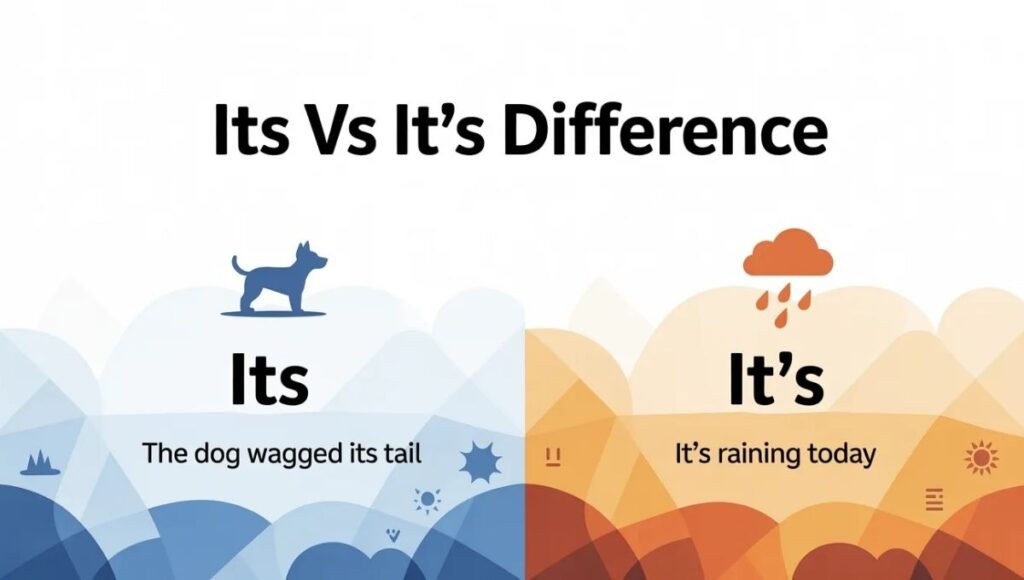
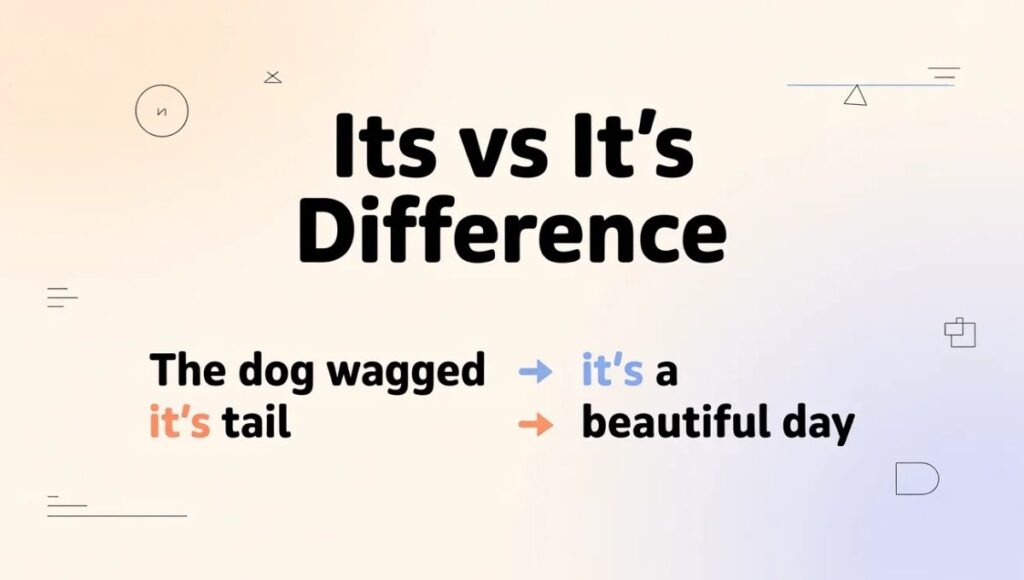
The easiest way to understand the its vs it’s difference grammar rule involves remembering one key idea.
Its shows possession.
It’s is a contraction of “it is” or “it has.”
Think of it like this:
- Its = belonging to something
- It’s = short form of it is or it has
However, many writers instinctively add an apostrophe when showing possession. That habit creates mistakes because its never uses an apostrophe.
For example:
- Correct: The company updated its website.
- Correct: It’s improving customer support this year.
Notice the difference. The first sentence shows ownership. The second replaces it’s with it is.
A quick test helps. Replace the word with “it is.” If the sentence still works, it’s belongs there.
What Does “It’s” Mean?
Many learners ask the same question: What Does “It’s” Mean?
The answer stays simple.
It’s is a contraction. It shortens two possible phrases:
- It is
- It has
Here are some examples:
- It’s raining outside.
(It is raining) - It’s been a long week.
(It has been)
The apostrophe replaces the missing letter “i” in is or ha in has.
Email Scenario Example
Subject: Meeting Confirmation
Hello Jessica,
It’s great to hear that the marketing team approved the proposal. I’ll prepare the presentation slides tonight so we can review them tomorrow.
If you need any additional data, just let me know.
Best regards,
Michael
Notice how it’s great to hear clearly means it is great to hear.
Understanding Its Usage in Possessive Form
Now let’s focus on its usage.
The word its shows ownership or belonging. It works the same way as his, her, or their.
Examples:
- The dog wagged its tail.
- The company announced its new product.
- The laptop lost its battery power.
Unlike most possessive nouns, its never uses an apostrophe.
Workplace Scenario Example
Subject: Product Update
Hi Daniel,
The software team finished testing the new platform. The system improved its performance after the latest update.
Our developers will now release its security patch tomorrow morning.
Thanks,
Emily
In this example, its performance and its security patch show possession.

Its vs It’s Difference Examples in Real Sentences
Examples help clarify confusing grammar rules. The following sentences demonstrate the its vs it’s difference examples in everyday writing.
| Sentence | Correct Word | Explanation |
|---|---|---|
| The company improved its policies. | its | Shows possession |
| It’s important to follow the guidelines. | it’s | Means “it is” |
| The phone lost its signal. | its | Belonging to the phone |
| It’s been a productive meeting. | it’s | Means “it has” |
| The website updated its design. | its | Possessive |
This table highlights how its vs it’s difference grammar works in practical sentences.
Comparing It’s vs It Is
Another helpful perspective comes from looking directly at it’s vs it is.
Whenever you see it’s, you can replace it with it is or it has.
Examples:
- It’s difficult to manage deadlines.
→ It is difficult - It’s been updated recently.
→ It has been updated
If replacing it sounds awkward, then its probably belongs there instead.
Example:
❌ The company improved it is reputation
✅ The company improved its reputation
Email Scenario Demonstrating the Difference
Professional communication often reveals grammar mistakes. Let’s examine an example.
Incorrect Email
Subject: Website Issue
Hello Brian,
The platform lost it’s connection earlier today. We’re fixing the problem so its running normally again soon.
Regards,
Karen
This message contains two mistakes.
Corrected Email
Subject: Website Issue
Hello Brian,
The platform lost its connection earlier today. We’re fixing the problem so it’s running normally again soon.
Regards,
Karen
Notice how the Its vs It’s Difference completely changes the accuracy of the message.
Its vs It’s Difference Grammar Explained Simply
English grammar contains exceptions that confuse learners. The rule behind its vs it’s difference grammar exists because possessive pronouns never use apostrophes.
Consider similar examples:
| Pronoun | Possessive Form |
|---|---|
| he | his |
| she | her |
| they | their |
| it | its |
Just like his or their, the possessive form its does not require punctuation.
However, it’s follows the standard contraction rule. The apostrophe replaces missing letters.
Its vs It’s Difference Worksheet Style Practice
Practice helps reinforce the rule. The following its vs it’s difference worksheet section lets you test your understanding.
Fill in the correct word.
- The dog wagged ___ tail happily.
- ___ going to rain later tonight.
- The company updated ___ privacy policy.
- ___ been a challenging project.
- The phone lost ___ battery power.
Answers
- its
- it’s
- its
- it’s
- its
These exercises strengthen your awareness of its usage.
Its vs It’s Difference Quiz
Ready for a quick challenge? Try this short its vs it’s difference quiz.
Choose the correct word.
1. The organization updated ___ strategy.
A) its
B) it’s
2. ___ important to review the contract carefully.
A) its
B) it’s
3. The software improved ___ performance after the patch.
A) its
B) it’s
4. ___ been a successful campaign.
A) its
B) it’s
Correct Answers
- its
- it’s
- its
- it’s
Small quizzes like this quickly reinforce the Its vs It’s Difference.
Its vs Their: Understanding the Related Confusion
Another grammar issue involves its vs their.
Both words show possession. However, they refer to different subjects.
| Word | Meaning |
|---|---|
| its | belonging to a single thing |
| their | belonging to multiple people or things |
Examples:
- The company launched its product yesterday.
- The employees shared their feedback during the meeting.
Business Email Scenario
Subject: Client Feedback
Hello Sophia,
The development team finished reviewing the customer comments. The company will update its platform based on their suggestions.
Thanks,
Nathan
Here, its platform refers to the company. Their suggestions refers to the customers.
Simple Memory Tricks for Its vs It’s Difference
If this rule still feels tricky, try these simple memory tips.
Trick 1: Expand the Word
Replace it’s with it is.
If the sentence still works, the apostrophe belongs.
Example:
It’s amazing.
→ It is amazing.
Trick 2: Think Possession
When something owns something, choose its.
Example:
The phone lost its charger.
Trick 3: Compare Pronouns
Remember:
- his
- hers
- theirs
- its
None use apostrophes.
Why This Grammar Rule Matters
Small grammar mistakes can weaken your writing credibility. Readers might question professionalism when they notice simple errors.
Understanding its vs it’s difference grammar improves several areas:
- Professional emails
- Blog writing
- Academic essays
- Business communication
- Social media posts
Clear grammar shows attention to detail. It also builds trust with your audience.
Final Thoughts on the Its vs It’s Difference
The Its vs It’s Difference becomes simple once you recognize the core rule.
- Its shows possession.
- It’s means it is or it has.
Whenever confusion appears, pause and test the sentence. Replace it’s with it is. If it fits, the contraction works. If not, choose its.
Practice through examples, worksheets, and quizzes until the rule feels natural. Soon you’ll spot the difference instantly.
Once you master its usage, understand it’s meaning, and apply these examples, this once-confusing grammar point becomes effortless.