Language on the internet moves fast. Blink once and a new word appears. Blink twice and everyone’s already using it like it has existed forever.
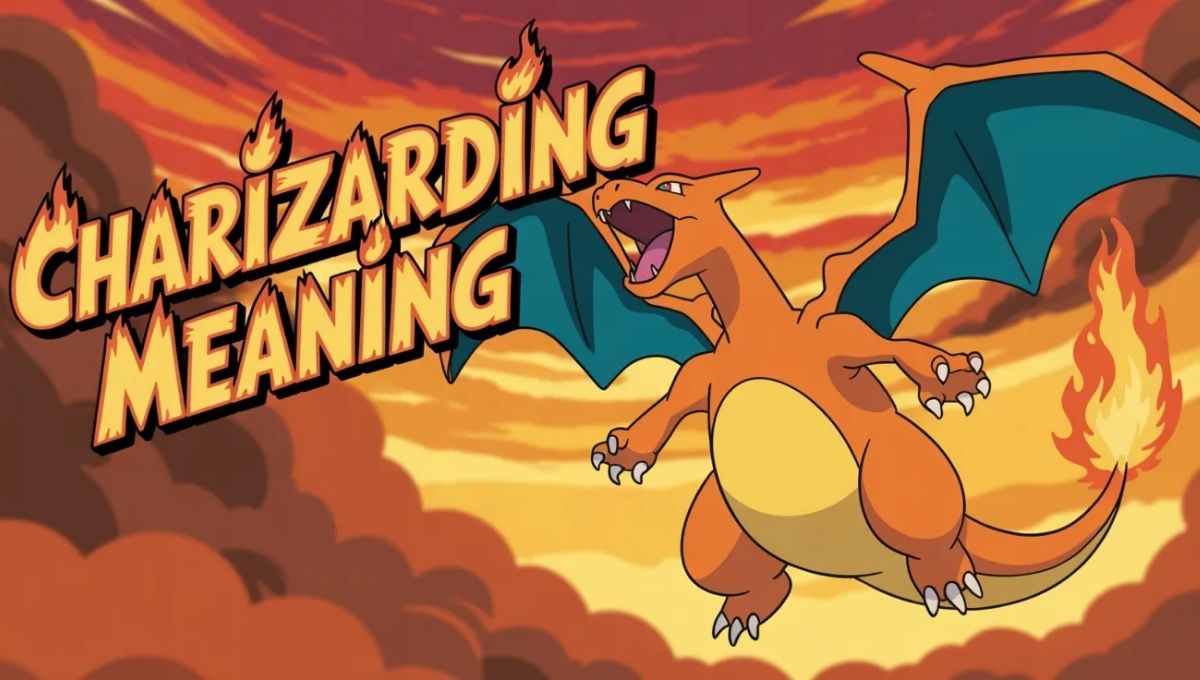
“Charizarding” is one of those words.
You might spot it in a gaming chat. Someone types, “Bro stop charizarding.”
Or on TikTok. A caption reads, “He came in charizarding the whole lobby.”
At first glance, it sounds silly. Maybe even harmless. Just another Pokémon joke, right?
Not exactly.
Depending on context, it can mean bragging, roasting, dominating, showing off, acting reckless, or straight-up bullying. That range is exactly why people argue about it.
Some treat it like playful slang. Others see it as toxic behavior dressed up as a meme.
So what’s the truth?
This guide breaks down the charizarding meaning, the meaning of charizarding in English, where it came from, how people use it, and why it sparks controversy online.
Clear. Practical. No fluff.
Charizarding Meaning in English: A Clear Definition First
Start simple.
Charizarding means acting overly dominant, boastful, aggressive, or “burning” others with words or actions, often in a show-off or confrontational way.
Think of someone who:
- Brags loudly
- Flexes skills nonstop
- Roasts everyone
- Takes over conversations
- Acts untouchable
That’s charizarding.
It usually carries heat and intensity, just like Charizard’s fire attacks.
Quick everyday examples
- “He kept charizarding after winning one match.”
- “Stop charizarding the group chat and chill.”
- “She charizarded the debate and left everyone speechless.”
Notice something?
Sometimes it sounds funny. Other times it sounds rude.
That dual nature is where the controversy begins.
Where Did Charizarding Come From? The Origins Explained
Slang rarely appears out of nowhere. It grows from culture.
In this case, the root is obvious.
Pokémon. Charizard. Fire. Attitude. Power.
But there’s more to it.
Charizard’s Personality Created the Blueprint
Charizard isn’t just strong. It’s famously:
- Stubborn
- Proud
- Disobedient
- Hot-tempered
- Overconfident
- Extremely powerful
If you watched the anime, you probably remember this.
Charizard ignored Ash for months. It refused commands. It only fought when it felt like it. It acted like the boss of everyone.
That attitude stuck in fans’ minds.
Over time, people started describing similar behavior with Charizard comparisons:
- “He’s acting like Charizard.”
- “She went full Charizard.”
- “Stop pulling a Charizard.”
Eventually that turned into a verb.
Charizard → Charizarding
That’s how internet language works. Fast. Messy. Creative.
From Forums to Slang
The term first appeared informally in:
- Gaming forums
- Pokémon fan communities
- Discord servers
- Meme pages
- Twitch chats
Gamers used it jokingly.
Then TikTok picked it up.
Then meme culture amplified it.
Now it floats everywhere.
Once a slang term spreads across platforms, it becomes part of everyday speech.
The Core Meanings of Charizarding (Context Changes Everything)
Here’s where most articles get lazy. They give one definition and move on.
But the meaning of charizarding shifts based on tone and setting.
It’s not one thing.
It’s several.
Understanding those layers helps you use it correctly and avoid embarrassing mistakes.
Acting Overconfident or Arrogant
This is the most common use.
Someone behaves like they’re superior. Talks big. Acts unbeatable.
Classic ego energy.
Example:
Jake wins one FIFA match and starts trash-talking everyone.
His friend says, “Relax bro stop charizarding.”
It’s playful but critical.
Translation: Stop acting cocky.
Showing Off Skill or Power
Here the tone can be positive or neutral.
You’re simply dominating.
Not necessarily insulting.
Just strong.
Example:
“She charizarded the tournament and went undefeated.”
In this case it means crushed the competition.
More admiration than insult.
Roasting or Flaming Someone Online
Now the word turns sharper.
Fire symbolism kicks in.
You’re “burning” people verbally.
Think:
- savage jokes
- harsh comebacks
- aggressive teasing
Example:
“He charizarded the comments section and everyone logged off.”
This version can border on bullying.
Which explains the controversy.
Being Reckless or Out of Control
Sometimes it simply means chaotic energy.
No filter. No restraint.
Example:
“They went charizarding at the party and broke three chairs.”
That means wild behavior. Zero chill.
Quick Summary Table
| Context | Meaning | Tone | Example |
|---|---|---|---|
| Ego | Overconfident | Negative | Bragging nonstop |
| Skill | Dominating | Positive/neutral | Winning everything |
| Online | Roasting/flaming | Mixed | Insult battles |
| Chaos | Reckless behavior | Negative | Acting wild |
Same word. Different vibes.
That flexibility makes slang powerful and dangerous.
Why Is Charizarding So Controversial?
Here’s the heart of it.
Some slang is harmless.
This one isn’t always.
The Double Meaning Problem
When a word can mean:
- funny banter
- OR harassment
People argue.
One person laughs.
Another feels attacked.
No one agrees on boundaries.
Humor vs Bullying
Playful roasting is normal among friends.
But strangers?
Different story.
Calling someone out publicly or humiliating them “for fun” can turn ugly fast.
When charizarding becomes:
- mocking
- targeting
- humiliating
It stops being funny.
It becomes toxic.
Generational Gaps Make It Worse
Older users might hear the term and think:
“What is that nonsense?”
Younger users treat it casually.
Gen Alpha especially uses slang fast and loosely.
Meaning shifts every month.
So context breaks down across age groups.
Misunderstandings grow.
Platform Moderation Issues
Some platforms tolerate aggressive banter.
Others enforce strict rules.
For example:
- Discord gaming servers → relaxed
- Work Slack → not appropriate
- School chats → risky
- Professional spaces → avoid completely
Using charizarding wrongly can cost you credibility.
Or worse, an account ban.
Psychology Behind Charizarding Behavior
Here’s something deeper.
Why do people charizard at all?
Because it feels powerful.
Human behavior research shows people often:
- seek dominance
- want recognition
- crave attention
- protect ego
Charizarding gives instant status.
If you roast someone and everyone laughs, you feel superior.
It’s social currency.
But it’s fragile.
Push too far and people turn against you.
So the behavior walks a thin line.
How Charizard’s Traits Shaped the Slang
Look at the symbolism.
Charizard is:
- fire type
- explosive
- high damage
- intimidating
- visually dramatic
That maps perfectly onto the slang.
Fire equals burns.
Burns equal insults.
Strength equals dominance.
Attitude equals ego.
It’s almost poetic.
Language loves metaphors. This one stuck.
When It’s Okay to Use Charizarding
Not every use is bad.
Used smartly it’s harmless fun.
Safe situations
- among close friends
- gaming squads
- meme captions
- self-deprecating jokes
- playful competition
Example:
“I’m charizarding today. Coffee kicked in.”
That’s just humor.
Nobody feels attacked.
When You Should Avoid Using It
This matters more.
Avoid completely in:
- workplace chats
- professional emails
- interviews
- classrooms
- with strangers
- serious discussions
Why?
Because tone gets lost in text.
What sounds funny to you might sound hostile to someone else.
And reputations break faster than they build.
Synonyms and Alternatives for Charizarding
Sometimes you want similar meaning without risk.
Here are safer options.
Synonyms
- flexing
- roasting
- flaming
- dominating
- grandstanding
- peacocking
- showing off
Antonyms
- humble
- chill
- low-key
- respectful
- supportive
Choosing softer language keeps conversations smooth.
Real Conversation Examples of Charizarding
Let’s make this practical.
Gaming chat
“Dude stop charizarding after one kill.”
Classroom
“He charizarded the presentation and didn’t let others talk.”
TikTok caption
“Charizarding the gym today. New PR.”
Group text
“Why you charizarding at 8am relax.”
See how tone changes each time?
Same word. Different feel.
Charizarding in Meme Culture and Social Media
Memes helped this term explode.
Especially:
- TikTok
- Discord
- YouTube Shorts
Fire edits. Pokémon clips. Roast compilations.
People love exaggeration.
Charizard fits perfectly.
Big wings. Big flames. Big energy.
Memes reward extremes.
So charizarding became shorthand for “maximum intensity.”
Is Charizarding an Official Word?
Short answer.
No.
You won’t find it in traditional dictionaries yet.
It’s slang.
But slang often graduates.
Words like:
- selfie
- ghosting
- stan
- binge-watch
All started informal.
Now they’re official.
If charizarding sticks around long enough, it might follow the same path.
Language evolves through use.
Not permission.
Charizarding Meaning in Hindi (चारिज़ार्डिंग का मतलब)
For bilingual readers, here’s a clear translation.
चारिज़ार्डिंग का मतलब है — घमंड करना, डींग मारना, किसी को जलाना या बहुत ज्यादा दिखावा करना।
Examples:
- “वो मैच जीतकर चारिज़ार्डिंग कर रहा था।”
- “इतना चारिज़ार्डिंग मत करो, शांत रहो।”
Tone remains similar.
Playful or insulting depending on context.
Case Study: How a Joke Turned Toxic
Consider this real scenario.
A gaming server had 20 friends.
Roasting was normal.
One member started charizarding constantly.
Every message was:
- mocking
- insulting
- one-upping
At first people laughed.
After a week, nobody replied.
After a month, he got muted.
Lesson?
Even funny slang becomes exhausting if overused.
Balance matters.
Quick Do’s and Don’ts Cheat Sheet
Do
- use among friends
- keep it light
- read the room
- joke about yourself
Don’t
- insult strangers
- use professionally
- overdo it
- rely on it constantly
Simple rules. Big difference.
FAQs About Charizarding Meaning
What is charizarding in simple words?
Acting overly confident, dominant, or roasting others aggressively.
Is charizarding rude?
It can be. Depends on tone and context.
Where did it come from?
Pokémon fandom and gaming culture.
Is it real slang?
Yes. Informal but widely used online.
Should kids use it?
Only playfully. Avoid using it to bully or insult.
What does charizarding mean to Gen Alpha?
Usually showing off or dominating.