
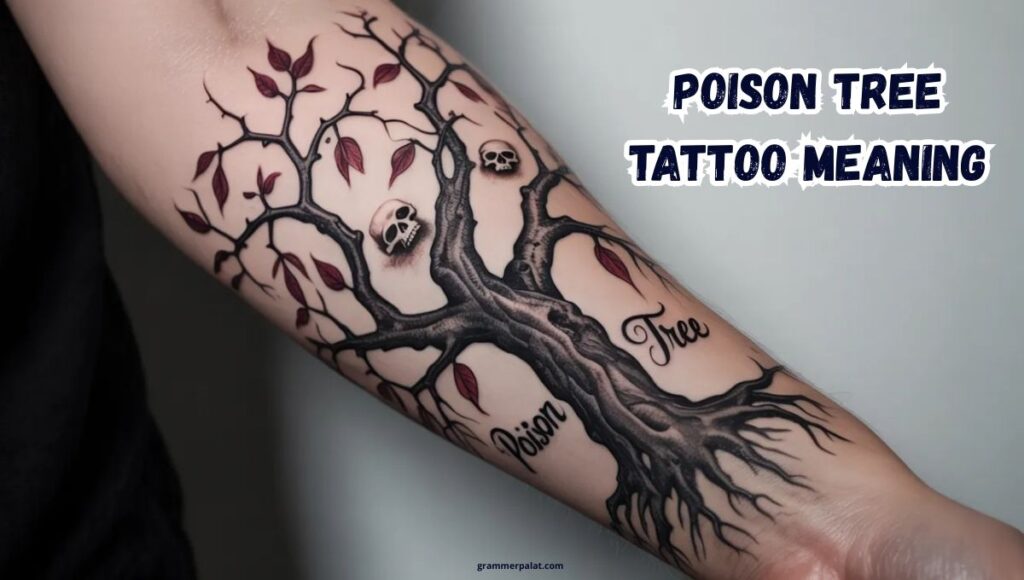
Tattoos are more than ink on skin they tell stories, mark life transitions, and capture emotions that words sometimes cannot. Among the rich tapestry of tattoo art, the poison tree tattoo stands out for its profound symbolism, literary roots, and emotional resonance. This tattoo design isn’t just about aesthetic appeal it carries a story of inner conflict, transformation, and personal growth.
If you’re curious about poison tree tattoo meaning, its variations, or how it can represent emotional journeys, this guide explores everything you need to know.
Contents
- 1 Literary Origins: William Blake Poison Tree
- 2 Core Symbolism of Poison Tree Tattoos
- 3 Psychological and Personal Significance
- 4 Popular Poison Tree Tattoo Designs
- 5 Cultural and Spiritual Tattoo Meanings
- 6 Color Psychology in Tattoos
- 7 Tattoo Placement Guide
- 8 Tattoo Artists’ Interpretation and Style Choices
- 9 Combining Symbolic Tattoo Motifs
- 10 Transforming Negative Emotions Through Tattoos
- 11 Influence of Celebrity and Tattoo Trends
- 12 Choosing the Right Tattoo Artist
- 13 Poison Tree Tattoo Aftercare
- 14 Alternative Symbolic Tree Tattoos
- 15 FAQs About Poison Tree Tattoos
- 16 Conclusion
Literary Origins: William Blake Poison Tree
The poison tree tattoo draws inspiration from William Blake’s classic poem, A Poison Tree (1794). In the poem, Blake explores suppressed anger, deceit, and the consequences of nurturing negative emotions.
Key elements from the poem:
- Anger left unspoken grows like a poison tree.
- The fruit of the tree represents hidden resentment and its inevitable destructive outcome.
- The moral: honesty and emotional expression prevent harm to oneself and others.
This literary tattoo meaning appeals to those who appreciate depth and storytelling in their ink. Literary tattoos inspired by Blake, like the poison tree, offer both aesthetic appeal and tattoo psychology, connecting art to the human psyche.
“I was angry with my friend; I told my wrath, my wrath did end. I was angry with my foe; I told it not, my wrath did grow.” – William Blake
The line above often inspires shadow work tattoos, reminding individuals to confront hidden emotions rather than suppress them.
Core Symbolism of Poison Tree Tattoos
The meaning of poison tree tattoo is multi-layered. At its core, it represents:
- Emotional awareness: Acknowledging suppressed feelings.
- Caution: A visual reminder of the consequences of unresolved anger.
- Transformation: Turning negative experiences into personal growth.
Other poison tree symbolism includes:
| Symbol | Meaning in Tattoo Art |
|---|---|
| Tree | Growth, life, rootedness |
| Fruit | Consequence of hidden emotions, temptation |
| Dark branches | Internal struggle, challenges |
| Thorns | Protection, boundaries, caution |
This symbolic richness makes the tattoo highly versatile, appealing to people drawn to dark tattoo designs, gothic tattoo designs, or botanical tattoo designs that convey layered meanings.
Psychological and Personal Significance
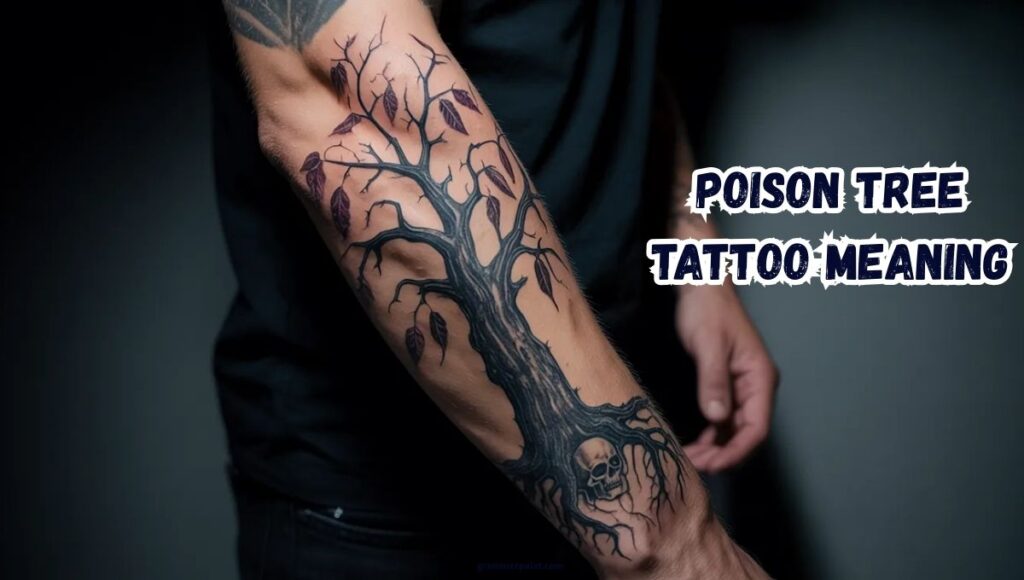
Choosing a poison tattoo meaning is often tied to introspection and personal narrative. People select this design as a form of therapeutic tattoos or to mark life transitions and tattoos that reflect resilience.
Tattoo psychology and emotional tattoo symbolism include:
- Overcoming negative emotions: Turning past grudges into a visual story.
- Personal growth tattoos: Recognizing the journey from resentment to self-awareness.
- Tattoos representing anger or resentment: A symbolic outlet for complex feelings.
Many wearers see their poison tree tattoo as a reminder to process emotions constructively rather than letting them fester.
Popular Poison Tree Tattoo Designs
The versatility of poison tree tattoo designs means there’s something for nearly every aesthetic and symbolic preference. Common variations include:
- Realistic botanical trees: Detailed leaves, twisted branches, and lifelike textures.
- Minimalist linework trees: Simple, abstract, and often small, representing subtle emotional expression.
- Fruit-centered designs: Apples or berries symbolize temptation, danger, or consequence.
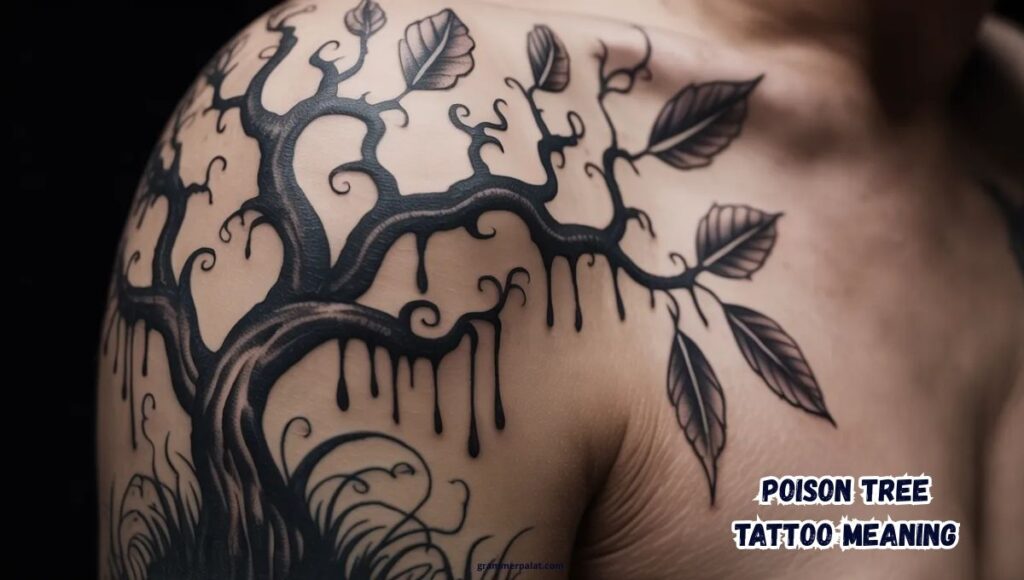
- Dark, gothic styles: Heavy black ink and shading for dramatic impact.
- Watercolor and neo-traditional approaches: Soft yet vibrant designs for artistic storytelling.
Table of popular poison tree tattoo variations:
| Design Type | Meaning | Popular Style |
|---|---|---|
| Realistic tree | Personal growth, shadow work | Botanical tattoo designs |
| Fruit-focused | Consequences of hidden anger | Gothic or dark tattoo designs |
| Minimalist linework | Subtle reflection | Modern literary tattoos |
| Watercolor interpretation | Transformation, healing | Personal growth tattoos |
| Combined motifs | Complexity of life/emotions | Combining symbolic tattoo motifs |
These variations allow the tattoo to reflect both personal meaning and artistic preference.
Cultural and Spiritual Tattoo Meanings
Poison tree symbolism isn’t confined to literature; it resonates across cultures and spiritual traditions.
- Western culture: Focuses on moral lessons, emotional consequences, and literary heritage.
- Eastern culture: Trees symbolize life cycles, wisdom, and connection to the universe.
- Spiritual tattoo symbolism: Many use poison tree tattoos as reminders of personal transformation or therapeutic tattoos for emotional balance.
The tattoo’s meaning shifts slightly depending on cultural context, allowing each piece to be deeply personal while still recognizable in broader tattoo communities.
Color Psychology in Tattoos
Color plays a crucial role in how a tattoo is perceived. The color psychology in tattoos influences emotion, tone, and symbolism.
- Black: Shadow, secrecy, inner struggles (shadow work tattoos)
- Red: Anger, temptation, or intense passion
- Green: Growth, renewal, and resilience
- Gold or yellow accents: Transformation, enlightenment, hope
Careful use of color enhances poison tree tattoo symbolism, allowing the design to communicate multiple layers of meaning.
Tattoo Placement Guide
Where you place a poison tree tattoo can influence its visibility and impact. Tattoo placement guide recommendations include:
- Forearm or wrist: Visible, constant reminder of personal growth.
- Back or chest: Offers larger canvas for detailed tree designs.
- Ribs or side: Private, intimate placements for personal reflection.
- Shoulder or thigh: Blends with other symbolic tattoos, allowing layering of meaning.
Placement affects both aesthetics and meaningful tattoo storytelling, creating a canvas for transformation and healing through tattoos.
Tattoo Artists’ Interpretation and Style Choices
Artists bring poison tree tattoo symbolism to life in countless ways. They may:
- Use twisted branches and gnarled roots to reflect inner struggle.
- Combine literary motifs from Blake’s poem for a literary tattoo meaning.
- Integrate tattoos representing anger or resentment subtly with other symbols for layered storytelling.
Tattoo artist consultation tips:
- Review portfolios to ensure experience with dark tattoo designs or botanical tattoo designs.
- Discuss emotional meaning and color preferences.
- Explore size, placement, and style options collaboratively.
Combining Symbolic Tattoo Motifs
Many enthusiasts combine the poison tree tattoo with other symbolic elements:
- Flowers or vines: Balance between beauty and danger.
- Skulls or snakes: Mortality, temptation, or hidden threats.
- Quotes or script: Direct connection to William Blake poison tree lines or personal reflections.
These combinations enrich meaningful tattoo storytelling and create unique, multi-layered designs.
Transforming Negative Emotions Through Tattoos
A poison tree tattoo can serve as a visual tool for overcoming negative emotions. Tattooing allows individuals to:
- Express anger or resentment safely.
- Convert emotional struggles into personal growth tattoos.
- Reflect therapeutic tattoos principles by creating a permanent reminder of resilience.
For many, the act of tattooing itself becomes a ritual of transformation and healing through tattoos.
Influence of Celebrity and Tattoo Trends
Celebrity influence can shape the popularity of poison tree tattoo variations. High-profile figures with literary or symbolic tattoos inspire trends in both gothic tattoo designs and dark tattoo designs.
- Social media amplifies interest in literary tattoos inspired by Blake.
- Tattoo community and trends often reflect deeper cultural engagement with symbolism rather than just aesthetics.
Choosing the Right Tattoo Artist
Selecting the right tattooist ensures your poison tree tattoo meaning translates into art effectively:
- Look for artists skilled in botanical tattoo designs or literary-inspired tattoos.
- Share references and personal stories to guide the tattoo design meanings.
- Discuss tattoo psychology aspects to emphasize emotion and symbolism.
Poison Tree Tattoo Aftercare
Proper aftercare ensures longevity and clarity. Poison tree tattoo aftercare includes:
- Cleaning gently with mild soap and lukewarm water.
- Applying fragrance-free healing ointments.
- Avoiding direct sun exposure for at least a few weeks.
- Regular moisturizing to maintain color psychology in tattoos and prevent fading.
Proper care preserves both aesthetics and symbolic tree tattoos meanings.
Alternative Symbolic Tree Tattoos
If the poison tree tattoo doesn’t resonate fully, alternatives include:
| Tree Type | Symbolism | Recommended Style |
|---|---|---|
| Yggdrasil | Life, connection, fate | Dark/Neo-traditional |
| Bodhi Tree | Awakening, enlightenment | Botanical tattoo designs |
| Oak | Strength, endurance | Minimalist or realistic |
| Willow | Mourning, reflection | Gothic tattoo designs |
These symbolic tree tattoos offer meaningful alternatives while preserving emotional depth.
FAQs About Poison Tree Tattoos
What does a poison tree tattoo mean?
- It symbolizes suppressed anger, personal growth, and the consequences of emotional neglect.
Can it represent transformation?
- Absolutely, it’s a common choice for life transitions and tattoos marking emotional change.
How does placement affect meaning?
- Visibility enhances storytelling, while hidden placements can reflect personal introspection.
Is it only about negativity?
- No, it also conveys therapeutic tattoos, personal growth tattoos, and transformation and healing through tattoos.
Conclusion
The poison tree tattoo is more than a design it’s a bridge between literature, emotion, and personal storytelling. From William Blake poison tree roots to botanical tattoo designs and modern dark tattoo designs, these tattoos capture complex feelings and growth journeys.